My name is Bill Fullerton, and I am a C5-6 quadriplegic. I have been paralyzed since 1988, and this is my story.
Growing up, I loved motorcycles. I finally convinced my parents to buy me my first motorcycle when I was 11 years old. Within the first year, I entered my first race and realized that was all I wanted to do. I was heavily involved in racing throughout my junior high and high school years. I was also big on riding my BMX bicycle.
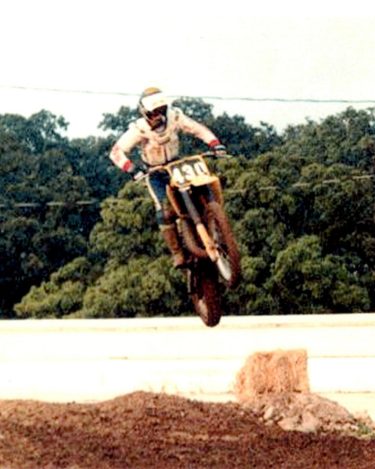
Unfortunately, in those days, wearing a helmet was not something we did when riding bicycles, so I had about 3 concussions and numerous incidents of broken bones. I kept my parents busy!
Before my injury, I was a business student working on a marketing degree at the University of Oklahoma.
My Spinal Cord Injury Story Begins With an Accident That Changed My Life
On June 7, 1988, I started my first day of summer school, having one more semester to complete my degree. My friend and I had gone to the river to practice on a track I had made. I was practicing for a benefit race for a former professional racer who had broken his neck a few years earlier in a motocross racing accident in Paris, France, rendering him a quadriplegic. He was somebody that I had always looked up to.
After the first practice session, my friend’s bike broke down, so he decided to pack up and leave. He told me to go with him, but I decided to stay and practice on my own. Unfortunately, on the first lap, I ended up falling on a corner and hitting my helmet on a tree root protruding from the ground.
This resulted in a compression burst fracture of my fifth and sixth cervical vertebrae. I was wide awake throughout the whole ordeal. It felt like somebody hit me over the head with a baseball bat and electrocuted me at the same time.
I knew immediately that I had broken my neck because I couldn’t move anything. I thought I would be there forever since the area was in the middle of nowhere. However, about 15 minutes later, another trail rider luckily found me lying there.
I remember him asking if I was okay, and I told him, “No, I think I broke my neck.” He called emergency services, and they arrived to transport me to the hospital.
My Time in Rehab
Luckily, I was in good shape back then, so I had no other complications from my accident.
I spent about a week in the Intensive Care Unit, then they did a spinal fusion and put me in my own hospital room, where I spent about two weeks or so in recovery.
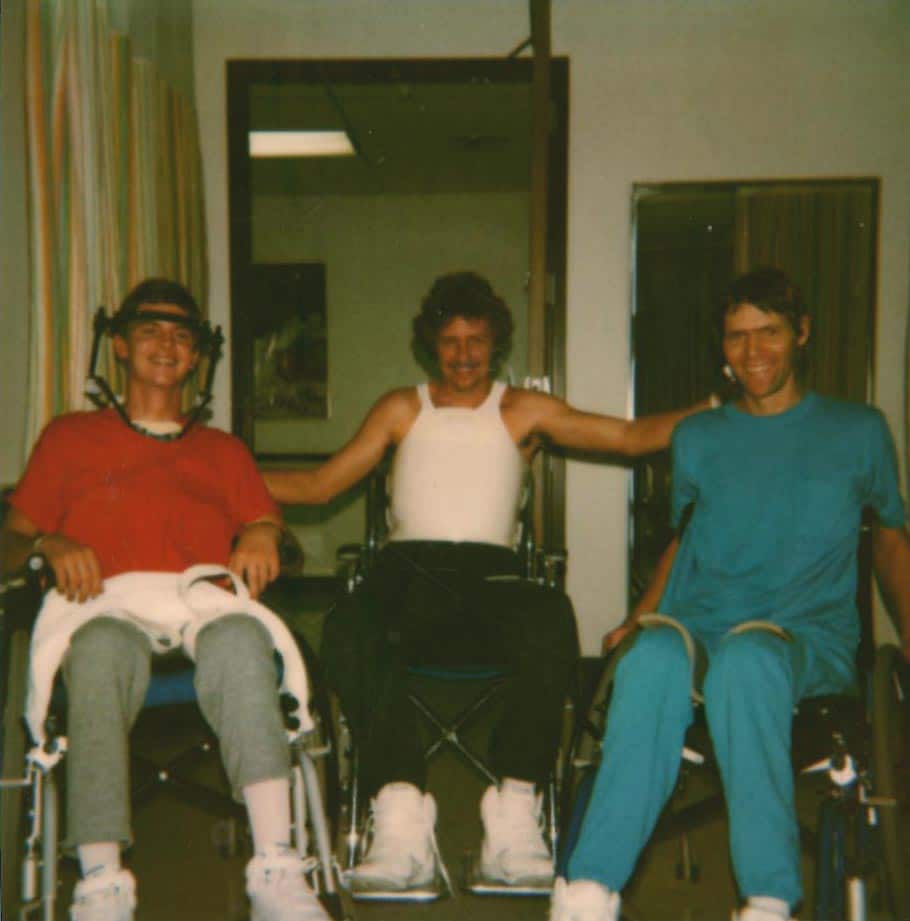
At that time, I had a Foley catheter inserted in me to drain my bladder. I remember wondering how my bowels and bladder were ever going to work, but at the time, I was more focused on trying to learn to walk again.
After the two weeks of recovery were over, I was transferred to a rehabilitation center in Oklahoma City.
The first couple of days in the rehab center, they would not let me out of bed until I was evaluated. I felt stir-crazy and ready to get things started.
I can still remember when they brought my first manual wheelchair to me. At first, I was unable to push the chair very well, but I pushed as hard as I could because I knew I had to regain my strength.
At the time, I was the only quadriplegic at the facility. I was in a room with three other paraplegics, so I was always trying to do what they were doing. However, I soon found that to be impossible. It did help push me to do as much as I could.
Between therapy breaks, we had free time. My buddies would go to the room and get into their beds to relax, but all I could do was sit in my chair and wish that I could be relaxing in bed, too. The earliest the nurses would put me to bed was at 8:00 p.m. I was so exhausted every day that I could not wait to be put in that bed!
Learning to Self-Catheterize
On my third day in rehab, a nurse came in with a catheter, extension tube, urinal, and a dishpan with soapy water. She informed me that they were taking out my Foley, and I was going to learn how to catheterize intermittently.
I looked at her in disbelief. Surely, I would never be able to do this on my own. But the nurse told me she believed I could do it.
Initially, it took approximately 30 minutes to complete this cathing process. At that time, I was told to wash and reuse catheters. This is the process I would go through:
1. The nurse would prepare the dishpan with some hot, soapy water and bring it to me.
2. She would use a towel to hold my sweatpants open so I could access my urethra.
3. I would then get my catheter and rinse it out in soapy water.
4. I learned to squirt lubricating jelly onto a towel, and then I would run the catheter through it to get it lubricated
5. Then, I would insert the catheter until urine started flowing into the urinal, which I would hang on the side of my wheelchair or next to me if I was in bed.
I figured out that I could get a good grip on the catheter by using my forefinger on one hand and my thumb on the other hand, even as a quadriplegic!
As the weeks passed, I began to improve. As the saying goes, practice makes perfect.
Initially, they had me catheterizing every four hours. This meant that I was woken up at 12:00 and 4:00 in the morning to catheterize. I remember falling asleep during one of my cathing sessions. They would also come in every two hours to turn me so I would not develop pressure sores. It seems like I was always exhausted.
UTIs and Other Complications
I can’t remember exactly how long it took, but I soon developed my first UTI (urinary tract infection). I remember not feeling very well, and I was having problems with suddenly leaking urine, so I knew something was not right.
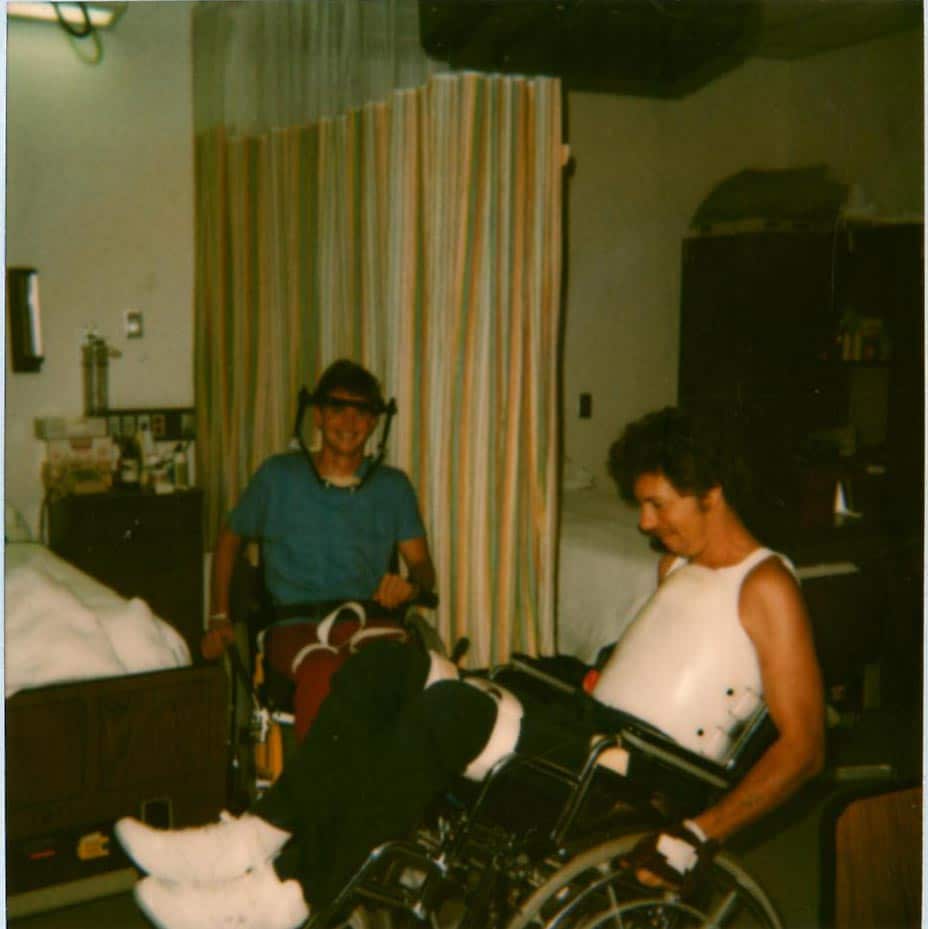
After a round of antibiotics, I began to feel like my old self again.
However, at that time, they only gave us one new catheter to use per week. Can you imagine? So of course, it wouldn’t be long before I developed another UTI.
After about three weeks, they took me in for another MRI and determined that my vertebrae were shifting. Apparently, the neck brace I was using was not holding my neck stable enough, so they had to put a halo on me. This required me to go back to the hospital.
When I went back to the hospital, they would not allow me to take the loaner wheelchair I was using along with the specialized cushion. The nurse at the hospital put me in a regular wheelchair with a pillow to sit on.
Because of this, I developed my first pressure sore on my coccyx.
Back to Rehab a Second Time
I remember that when I returned to the rehabilitation center, they were very upset that this was allowed to happen to me. They began treating the wound, but could not allow me to stay bedridden because I needed as much therapy as I could get before my insurance would quit covering the rehabilitation process.
I worked really hard and learned how to do as much as I could.
The best way I can describe how I felt is that I felt like a baby again. Here are some of the things that I relearned while in rehab:
- use the bathroom and self-cath
- get dressed
- hold silverware so I could eat on my own
- hold a pen and write
- do transfers from bed to chair and back with a halo on
I wasn’t able to learn how to dress myself yet, because it was impossible to do so with the halo on. When they released me, they wanted me to come back once the halo was off so they could teach me the things I couldn’t do yet.
Life Back at Home and New Independence
After about three months, I was finally released from the rehabilitation center. I no longer had my apartment in Norman, Oklahoma, so I moved back to my parents’ house to continue outpatient rehab. I still had the pressure sore, so I was also undergoing treatments for it.
After rehab, I returned to Norman, Oklahoma, and I remember it was a real challenge trying to find a wheelchair-accessible house in those days.
For the first few months, I had a provider who would come out every morning to help me with my bathroom regimen and getting dressed. I hated being reliant on having someone do these things for me. One day when I was out wheeling around in my chair, getting some exercise, I ran into a female quadriplegic who told me she was able to dress and take care of her needs. After that, I became determined to learn how to do these things on my own, and just a few weeks later, I had learned how to dress on my own as a quadriplegic. I also learned how to do my own bathroom routine.
This newfound independence was one of the biggest turning points after my spinal cord injury.
I got my first van and was able to get out, drive, and enjoy the world again on my own. I no longer had to rely on others to get to where I needed to go. What a relief!
Not long after that, I returned to school and completed my degree.
My Life Over Two Decades Later
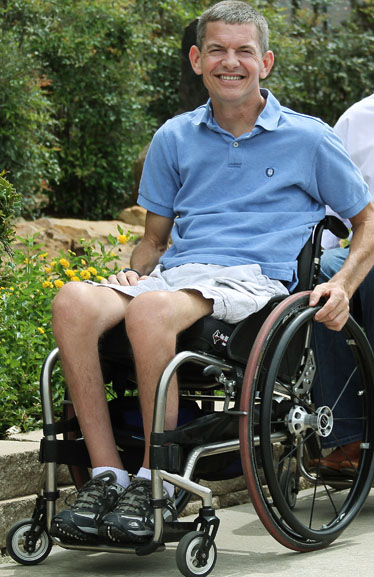
It has now been 23 years since my injury. I live on my own and am able to do everything for myself without anybody assisting me.
My first job was at an Independent Living Center, where I was in charge of the Technology Center. My job duties were to assist individuals with disabilities in accessing the necessary technologies available to them, tailored to meet their specific needs. Unfortunately, I had to quit this job due to another pressure sore that required surgery and long-term recovery.
The next job I took was working for a DME company selling wheelchairs. After that, I worked for a company that modified vehicles for people with disabilities. While working there, I was approached by Todd Brown to see if I would like to work at 180 Medical. I took him up on it and have been working at 180 Medical ever since then, seven years ago. Working here allows me to help other people with spinal cord injuries and others who need to use catheters. It’s fulfilling to be able to encourage them and help them learn how to cath on their own.
My current hobbies are riding my handcycle, weight training, and swimming. Years later, I still enjoy watching motocross racing. Once it’s in your blood, it’s there to stay.
I still enjoy visiting newly injured patients and offering them advice and encouragement. I remember and understand how important it can be to have someone to talk to who understands when you’re experiencing life anew as a person with a spinal cord injury.
