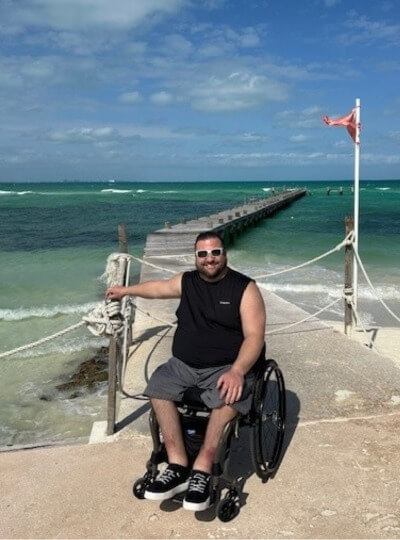
At 17 years old, Ryan’s life changed in an instant.
In 2001, while riding a Honda three-wheeler, he broke his back and sustained a T12/L1 complete spinal cord injury (SCI), leaving him paralyzed from the waist down. Suddenly, he was facing the same questions many people do after a spinal cord injury: how do I adjust? Where do I find peer support? How do I get through this and move forward?
“Going from being an active athlete in high school to being told I’d never walk again completely turned my life upside down. But I realized I had two options,” Ryan says. “I could be upset and mad at the world and give up. Or I could accept it and make the best of the changes and new life that I would have.”
For Ryan, as a person who never likes to steer away from a challenge, the choice was clear, even if it wouldn’t be easy.
Finding a Way Forward After Spinal Cord Injury
Like many people newly injured, the early days after his SCI were filled with shock and disbelief.
“I remember talking to my family after getting the news and everyone thinking, what are we going to do?” he recalls. “I said I have no choice but to accept it and make the best out of this situation, because I wasn’t going to let this ruin my life.”
Ryan spent the summer in a rehabilitation hospital, learning everything he needed to succeed in his new reality. That meant learning how to transfer, maneuver through daily life in a wheelchair, and take care of his body. Plus, he started learning how to use catheters.
Looking back on those early days, he says he wishes he had known about the variety of catheter options available. “When I first started, I was told I had to wash and reuse catheters, so I only got a few every month. That led to several UTIs.”
Ryan shares that one big lesson he came away with is that having better access to catheter education is essential. Knowing about his catheter product options and learning about sterile catheterization (using a catheter once and then disposing of it after use) would have been a game-changer for his health and daily life early on.
Despite those challenges, he kept going. “I had to make sure I knew how to succeed with any obstacles that would come my way,” he says.
Recovery with Faith, Family, and Community Support
Ryan is quick to credit the people who stood beside him from day one through the hard days of rehab.
“My family was there for me every single day during recovery,” he says. “My mom and dad were always there to tell me to keep my chin up or help me figure out how to do things on my own. And my brothers and my sister were there to tell me how strong I was. They helped keep my spirits up.”
His teammates and friends from school also played a significant role. Ryan still appreciates to this day how they showed up for him and didn’t treat him any differently just because of his injury.
“It really helped that they saw me as the same person I was and not just someone in a wheelchair,” Ryan shares.
With the support of his family, friends, and faith, Ryan didn’t give up. That fall, he returned to school to complete his senior year of high school. He also started getting involved with the spinal cord injury community and found his way back into sports.
“24 years later, I am extremely happy, and I have done and accomplished so many things that I originally thought were impossible to do in a wheelchair,” he shares. “I’ve met some amazing people, and I’ve turned my love of helping others into an opportunity to succeed in life.”
Peer Support Matters After a Spinal Cord Injury
While in rehab, Ryan also found encouragement in connecting with other spinal cord injury survivors.
“Several spinal cord injury peer mentors came in and talked to me about their situations and what they had gone through,” Ryan says. “They let me know that things were going to be okay.”
Those conversations gave Ryan hope for his future, and they inspired him to pay it forward.
“I eventually got to know every other patient that was in the hospital at the same time I was, and I even started doing my own peer mentor and support group with all of them.”
Because of his commitment to encouraging and connecting with other SCI patients while in rehab, Ryan earned the 2001 Barrow Neurological Institute Patient of the Year Award. It also set the foundation for a lifelong passion in Ryan’s life for helping others.
After his recovery, he became a peer mentor in the spinal cord injury community, regularly visiting rehabilitation hospitals and talking to newly injured patients, some of whom he’s still in touch with today.
One conversation, in particular, made a huge impact on him. Ryan spent time talking with a man who was in rehab and his wife. Years later, he ran into them unexpectedly at an event. “The wife told me how much it meant to her and her husband, and that they had a whole new outlook on life after our conversations. She said that my smile and happiness, even in the darkest of times, were contagious, and I brought hope and support to them. It was amazing to realize that I was really able to make a difference.”
Making a Difference on the Peer Support Team at 180 Medical
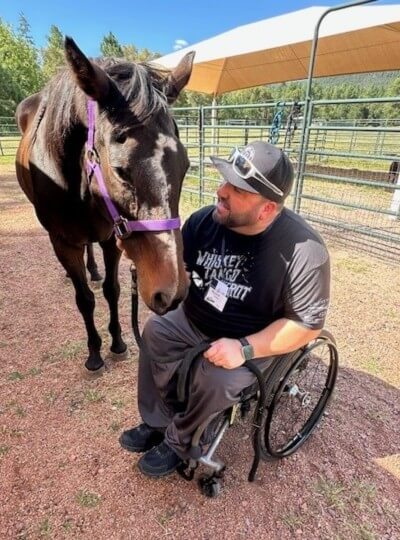
Today, Ryan makes a difference every day as a 180 Medical Referral Specialist and a member of our Peer Support team. He shares his experience of living with a spinal cord injury, answers questions, and provides encouragement to others who are new to their injury or new to using catheters.
“180 Medical’s Peer Support Program shows that we truly do care about our customers,” he says. “It helps improve their quality of life and gives them resources and comfort. They know they have someone here they can reach out to if they have questions or need someone to talk to. It really puts our service above the others.”
After each conversation, Ryan hopes that they feel empowered to tackle their challenges and make the most of their life. He wants each person to feel more confident not only about using catheters independently but about trying new things.
Through the Peer Support Program at 180 Medical, customers can connect with Ryan, Daniel, or our Patient Advocate Steve, who have all experienced what it’s like to recover after spinal cord injury firsthand.
You can reach out to us using the contact form on our Peer Support page to get started!
Ryan’s Message of Hope
Today, Ryan stays grounded in the same things that carried him through the most challenging moments: his faith, friends, and family.
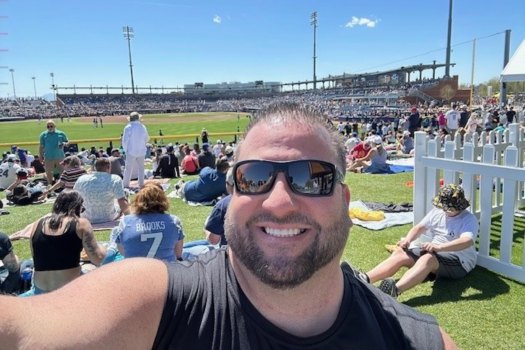
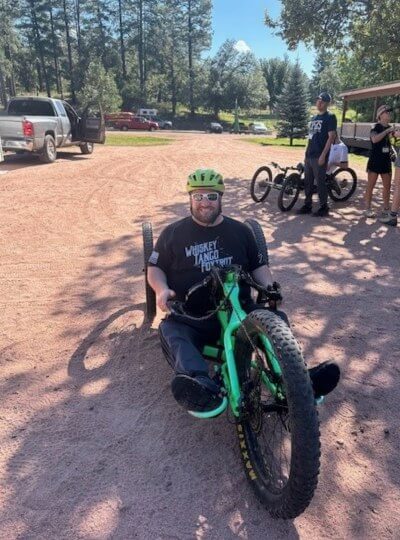
He continues to stay active through traveling, watching his favorite teams play, and taking part in adaptive sports. He also loves to give back through organizations like Camp with a Ramp, an adaptive outdoor retreat that brings people with mobility challenges together to experience nature, connection, and community.
“Waking up every day with a smile on my face and living life to the fullest shows people that anyone can thrive in any situation they may face in life,” he says. “I wish more people understood that just because they see someone in a wheelchair, that doesn’t define who they are as a person. I have accomplished and done more things in a wheelchair than I probably would have if I didn’t get injured.”
And for anyone reading his story who feels stuck or hopeless, Ryan offers this message:
“You are living proof that someone can go through some of the worst and most difficult moments, yet still remain kind and full of love. Be proud of your growth, and be proud of where you are in life. Never let someone tell you that you cannot do something. It’s just a matter of figuring out a way to do it. Never give up!”