
Are you new to the world of self-catheterization? The first and best place to start is with the basics, including the parts of catheters.
What is a Catheter?
A catheter is a flexible, hollow tube inserted into the urethra or a surgically created stoma to drain urine from the bladder.
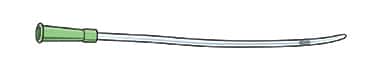
Not all catheters are created the same. They come in a variety of types, sizes, and lengths. Also, they come in different types of catheter materials.
Because each catheter user is an individual with their own needs, preferences, anatomy, medical condition, activity level, and lifestyle. What works or feels most comfortable for one person may not work for another.
180 Medical cares about getting the right catheter for you as an individual. That’s why we offer one of the widest varieties of urethral catheters on the market, including top brands such as GentleCath, Coloplast, Hollister, BD, and more! We offer free catheter samples so you can find the one that works best for you.
Catheter Basics: What are the Parts of a Catheter?
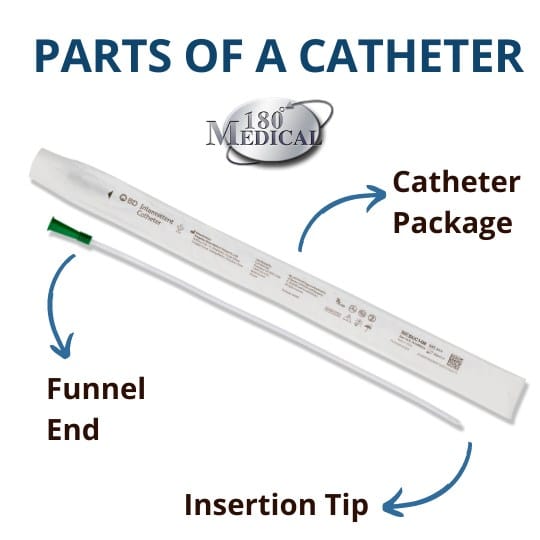
From tip to funnel, let’s go over the basics of a catheter, including its parts, how it works, and what each feature can do.
Catheter Insertion Tips
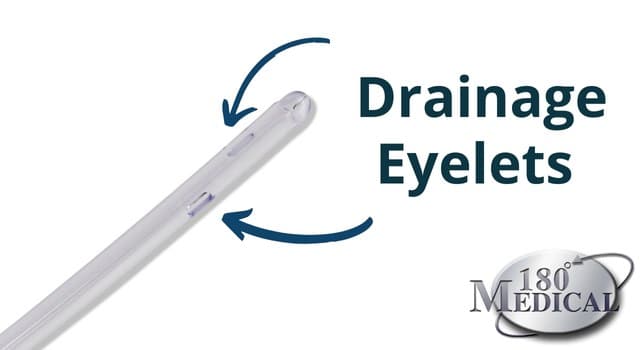
The insertion tip is the narrow end of your catheter that inserts into the urethra to reach the bladder. The insertion tip is where the catheter’s eyelets (drainage holes) are typically located.
All catheters, whether a Foley catheter, a straight intermittent catheter, or a closed system catheter kit, have either a straight tip or a coudé tip. The most common insertion tip is the straight tip, which works for most people.
However, some people are unable to insert a straight-tip catheter. Sometimes, switching to a curved insertion tip, known as a coudé tip catheter, is a good solution.
Reasons people need coudé catheters may include urethral strictures, enlarged prostate, blockages, false passages, or atrophic vaginas.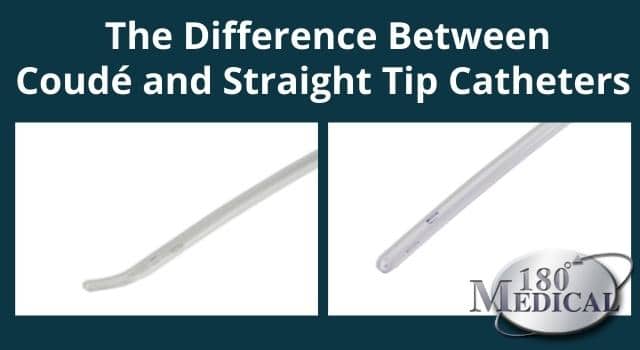
If you’re experiencing pain when cathing, please see your urologist or prescribing healthcare provider as soon as possible.
Drainage Eyelets
Drainage eyelets are small holes in the catheter tube, which are always positioned on or very near the insertion tip to make draining your urine easier. Catheter drainage eyelets are sometimes called drainage holes or catheter eyes.
Many catheter manufacturers today are working to make catheters more comfortable. Efforts include polishing and recessing these drainage eyelets to reduce friction and irritation of the delicate urethral tissues.
Catheter Funnels (Funnel Ends)
On the opposite end of your catheter, you’ll find a funnel. Catheter funnel ends are also known as connectors because they can connect to receptacles such as drain bags or portable urinals.
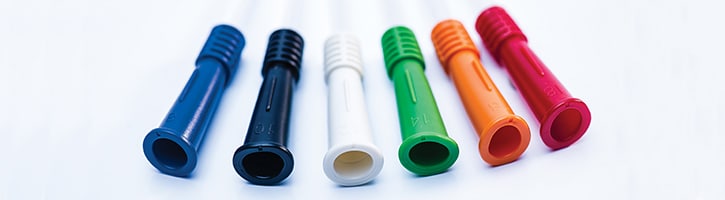
Depending on the type of catheter you’re using, you’ll most often find a specific color funnel. This is based on the universal color-coding system, which makes identifying your catheter’s French size much easier.
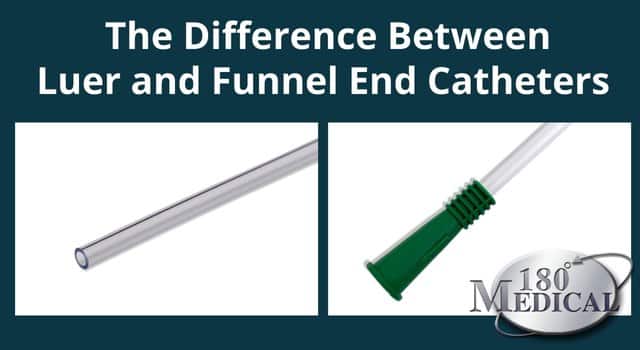
However, catheters don’t always come with funnel ends. Luer end catheters, also sometimes known as whistle tip catheters, do not feature a funnel or connector. Instead, it’s an open tube.
The choice between a catheter with a funnel or luer end is typically a matter of personal preference. Some people prefer having a funnel for easier gripping without touching the tube itself. The luer end catheters are sometimes preferred because the packaging may be flatter and more discreet.
Catheter French Sizes
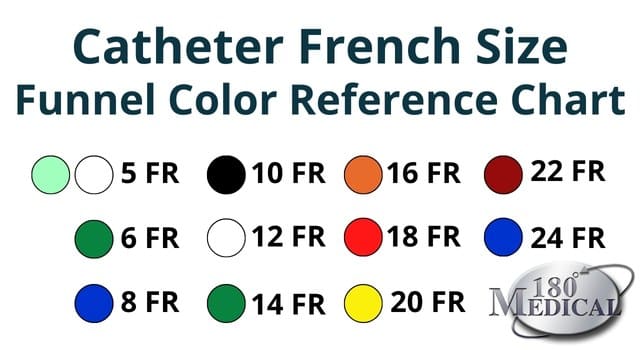
Catheters are sized by “French sizes,” which refers to the diameter of the catheter tube. These range from pediatric sizes as small as newborn to larger adult sizes. Most commonly, catheter sizes range from 5 Fr to 24 Fr, although for adults, the most common sizes are 12 to 18 Fr.
Thanks to a universal color-coding system, you can look at the funnel end to ensure you’re using the prescribed French size.
With the right French size, urine should flow from your bladder at a comfortable pace.
A catheter that is too small will let urine flow around the sides of the tube, which can make quite a mess. On the other hand, you don’t want a catheter that is too big for your urethra, which could cause discomfort or pain.
Your doctor will select and prescribe the appropriate French size with you, taking into account your preferences and your specific anatomy.
Do all catheters use the universal color system?
No. Exceptions to this rule are luer end catheters or red rubber catheters, which do not use the color-coding system.
Luer-end catheters do not have a funnel end. Red rubber catheters are typically the same red rubber color from tip to end. Also, some catheters are clear from end to end, depending on the brand.
What Are the Catheter Length Options?
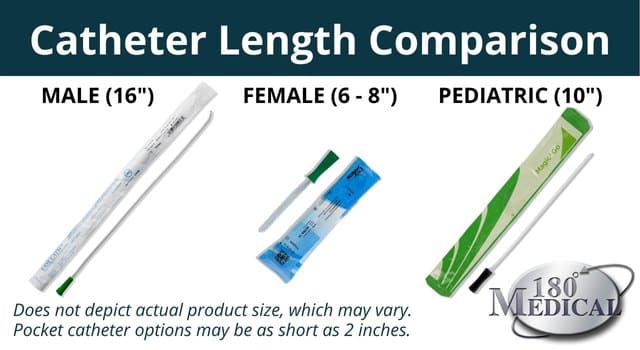
You can typically choose from three catheter lengths.
- Male length
- Female length
- Pediatric length
Women and children generally use shorter lengths because of their shorter urethras, although some prefer male catheters. If you’re looking for a shorter catheter or something more discreet, 180 Medical carries plenty of pocket catheter options.
Curious if your insurance covers catheters? We can verify your insurance plan to see if and how your catheter products may be covered.
What Are the Catheter Material Options?
Intermittent catheter supplies are available in different materials, including PVC (vinyl or plastic), latex rubber, silicone, POBE, and more.
This is because some people may prefer different levels of flexibility and rigidity in their catheter. Also, some people may have latex allergies, so they require catheters made without natural rubber latex.
Contact the Catheter Experts
At 180 Medical, we’ve specialized in catheter products for over 20 years.
When you contact us, you know you’re speaking with a well-trained Catheter Specialist who can help you find the right intermittent catheter. Plus, we’re here for any and all product questions.
Ready to find a catheter supplier that offers compassionate service and discreet shipping? Reach out to us to get started.

Disclaimer: This article is for informational purposes only and is not intended as medical advice. Information provided on 180medical.com should not be used as a substitute for medical advice, diagnosis, or treatment from a qualified healthcare professional. Please consult your healthcare provider with any questions about your condition, treatment, or medical supply needs.
