Seeing blood in your urine or inside your intermittent catheter after use can be alarming. Blood in urine, also known as hematuria, can have many possible causes, including urinary tract infections, catheter-related irritation or trauma, kidney or bladder stones, kidney disease, and other conditions that may need medical evaluation.
If you notice blood in your urine, contact your healthcare provider for guidance. Seek urgent medical attention if you have heavy bleeding, blood clots, severe pain, fever, chills, trouble urinating, difficulty inserting your catheter, or symptoms that feel severe or unusual for you.
Get more details with our helpful guide, such as what hematuria is, potential causes, and tips for what to do next.
What Is Hematuria (Blood in Urine)?
According to the Urology Care Foundation, hematuria is the presence of blood in urine.
Hematuria typically falls into two categories:
- gross hematuria, which is visually evident as pink, red, or dark urine or regular urine with clots or fragments of blood
- microscopic hematuria, which is detectable only under microscopic examination
Why Is There Blood in My Urine?
So what causes hematuria? Why are you seeing blood inside your catheter during or after use?
Hematuria can happen for many reasons. Some causes may be temporary or treatable, while others may require prompt medical attention. Because it can be difficult to know the cause without testing, blood in the urine should be discussed with a healthcare provider.
A few potential causes of hematuria in catheter users may include:
- UTIs (urinary tract infections)
- Bladder cancer
- Kidney infections or stones
- Interstitial cystitis
- Urethral trauma (due to improper catheterization techniques, such as forcing a catheter in or not using enough lubrication)
- Bladder or kidney trauma
- Certain medications, such as blood thinners
- Bladder cancer
- Enlarged prostate (BPH)
- Kidney disease
Sometimes, medical conditions such as an enlarged prostate or endometriosis may also cause blood to appear in the urine.

What Should I Do If There’s Blood in My Urine?
Hematuria is a symptom, not a disease. If you notice blood in your urine or inside your catheter after catheterization, contact your prescribing healthcare provider or urologist for guidance.
Blood in urine can sometimes be related to a urinary tract infection, catheter irritation, or another treatable issue.
However, it can also be associated with conditions that require prompt evaluation, such as kidney or bladder stones, kidney disease, or cancer. Testing may be needed to understand the cause.
Seek urgent medical attention if you have heavy bleeding, blood clots, severe pain, fever, chills, nausea or vomiting, trouble urinating, difficulty passing your catheter, or symptoms that feel severe or unusual for you.
Is Red or Pink Urine Always Blood?
Not always. Certain foods, medications, or supplements may change the color of urine.
However, it can be hard to tell whether a urine color change is caused by blood without testing. If your urine looks pink, red, or brown, contact your healthcare provider for guidance.
Can Using a Catheter Cause Hematuria (Blood in Urine)?
Catheter use can sometimes cause urethral irritation or minor trauma, especially if the urinary catheter you’re using isn’t well-lubricated, which can cause urethral friction.
The inside of the urethra (the tube leading from the bladder to the outside of your body) is very delicate. Sometimes, friction from a catheter size that’s too large, not lubricated, or poorly lubricated may lead to small amounts of blood in urine.
However, do not assume catheter irritation is the cause of blood in your urine. Hematuria can have many causes, so it’s important to contact your prescribing healthcare provider or urologist for guidance, especially if bleeding continues, recurs, or occurs with pain, fever, chills, difficulty urinating, or trouble inserting your catheter.
Ways Catheter Users May Help Reduce Irritation and Friction
Those who are new to using catheters may be more likely to see blood in urine due to new urethral irritation.
While not all instances of hematuria can be prevented, catheter users may want to consider a few things.
- Are you practicing a safe, hygienic catheterization technique?
- Are you drinking enough water and staying hydrated?
- Are you following your doctor’s prescribed catheterization schedule?
- Are you using a catheter that is the right size and type for your anatomy?
- Are you making sure your catheter is fully lubricated?
Here are a few tips that may help.
1. Use catheters as directed.
Intermittent catheters are intended for single use unless your healthcare provider gives you different instructions. Reusing catheters may increase the risk of contamination and infection. Follow your provider’s instructions, your insurance guidelines, and the product’s directions for use.
2. Never force your catheter in.
If you’re experiencing resistance when trying to insert your catheter, don’t force it in. This could cause urethral damage or excessive friction. Resistance may be due to a false passage or a urethral obstruction. Other times, it may be due to using an improperly sized catheter, such as one with a French size (diameter) that is too large for your urethra.
Either way, if you’re encountering significant resistance when inserting your urinary catheter, it’s time to call your prescribing healthcare provider. If you depend on catheters to fully drain your bladder, it’s crucial that you use them on schedule so your bladder doesn’t overfill.
3. Practice proper hygiene when cathing.
Catheter-associated UTIs can be common, but practicing optimal hygiene and keeping your hands off the catheter tube may help.
180 Medical offers step-by-step instructions for hygienically self-catheterizing, including videos for specific catheter types (straight, hydrophilic, and closed systems).
But here are a few quick tips to get started. Always be sure to wash or sanitize your hands before and after use. Using disinfecting wipes such as BZK or povidone-iodine around the urethral opening may also be helpful, especially if you experience recurrent UTIs.
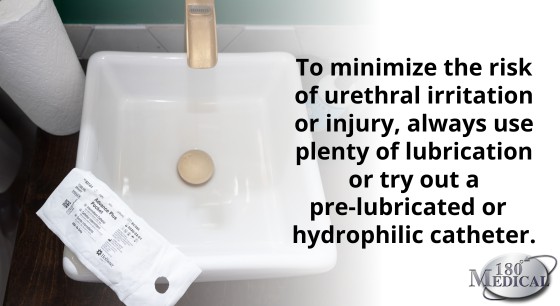
4. Make sure your catheter is always well-lubricated.
The urethra is actually pretty delicate. Using an uncoated, poorly lubricated catheter may cause friction and even microtears in your urethra. If you’re using an uncoated straight catheter, 180 Medical offers a variety of sterile, water-soluble catheter lubricants, including individually dosed packets.
If you’re using a hydrophilic catheter, make sure the hydrophilic coating or properties have been fully activated by water so it’s super slippery and ready to use before inserting it.
5. Get the right catheter for your needs.
There is no single catheter type, size, or brand that works for everyone. Catheters aren’t a one-size-fits-all medical supply. That’s why intermittent urinary catheters come in different sizes, types, and features to suit different users’ needs and bodies.
180 Medical offers one of the widest selections of catheters from major manufacturers and brands. When you choose 180 Medical, you’re not limited to just one brand or option. Based on your healthcare provider’s recommendations and prescription, we’ll help you find the right insurance-covered catheter that’s comfortable and easy to use.
Contact 180 Medical online or call 1-877-688-2729 to request catheter samples, verify your insurance plan’s catheter coverage, and get started.
Disclaimer: This article is for informational purposes only and is not intended as medical advice. Information provided on 180medical.com should not be used as a substitute for medical advice, diagnosis, or treatment from a qualified healthcare professional. Please consult your healthcare provider with any questions about your condition, treatment, or medical supply needs.
