
Whether you’re planning a vacation, hoping to travel to see family or friends, or just looking for a better way to discreetly carry your catheters to work or school? If you use intermittent catheters, traveling with your supplies may feel overwhelming at first. However, with a bit of planning, many people who self-cath can travel confidently and discreetly.
In this travel guide, real members of the 180 Medical Community share their top travel tips for people who use catheters.
Quick Tips for Traveling with Catheters
- Do not give up on traveling just because you use catheters.
- Calculate how many catheters and insertion supplies you use each day, then pack extras.
- Keep catheter supplies with you in your carry-on bag if you’re flying.
- Pack supplies in more than one place in case luggage is lost or delayed.
- Bring hygiene supplies, such as hand sanitizer, antiseptic wipes, gloves, and disposal bags.
- Consider compact, hydrophilic, pre-lubricated, or closed system catheter options for travel.
- Contact TSA Cares before your flight if you have questions about screening with medical supplies.
- For longer trips within the United States, contact 180 Medical in advance to discuss shipment options.
Travel Tips for People Who Use Catheters
Here are a few top tips from 180 Medical Community members, real people who use catheters every day.
Tip 1. Don’t give up on traveling just because you cath.
First, let’s address a common misconception. Many people who need to use catheters think they have to stay close to home all the time. That’s not the case.
Intermittent catheterization can free you from attached leg bags and bulky drainage bags associated with Foley catheters and external catheters. You can leave home, drain your bladder, and keep it private like so many of our customers do every day.
One member of the 180 Medical Community, Duane, stays very active. He regularly travels by car and plane with his wife to conventions and outings across the country.
Duane wants others who self-cath to know that they can travel too.
If you are concerned about discretion, you can choose from a wide selection of discreet catheters from various brands and types at 180 Medical. Plus, there are many ways to discreetly carry your catheter supplies.
Tip 2. Calculate how many supplies you need to take with you before you leave.
If you’re ready to start traveling or even try out shorter day trips, take some time beforehand to plan. You just need to make sure you have enough catheters on hand so you don’t run out and miss one of your scheduled catheterizations.
180 Medical customer Anthony says his top tip for other people who use catheters is to figure out how many catheters you’ll need for any outing, based on your prescription.
Anthony says he always calculates how many catheters he’ll need based on how many hours or days he will be away from home.
To do this for yourself, note how many supplies you use per day based on your prescription, including catheter insertion supplies such as gloves, antiseptic wipes, or additional lubricating jelly. Next, multiply that amount by the number of hours or days you’ll be away from home.
For example, if you self-cath four times per day and you’ll be away for about a week, you’d need to take along at least 28 catheters. However, you should always carry more just in case.
Tip 3. Always carry extras on hand.
Planning ahead also means considering possibilities like needing to use more catheters than expected, dealing with flight delays, or other emergencies.
180 Medical Community member Michele, who shared her story of surviving bladder cancer, says she carries a separate bag of catheters in her carry-on luggage or purse at all times. Also, she never leaves home without extras.

Duane purchased a small wheeled suitcase with a washable lining to hold all his cathing supplies. “This size is great for using as personal luggage that you can stow under the seat during flights. Plus, it’s easy to carry and clean. I keep it with me all the time.”
Tom, another member of the 180 Medical community, says it’s easy to discreetly carry a few extras on hand in addition to his luggage. “A catheter or two will fit in a large jacket pocket.”
Tip 4. Stay hygienic when using catheters in public restrooms.
Whether you’re at home, in a public restroom, or elsewhere, it’s incredibly important to your health to keep the process of cathing as hygienic as possible. Many 180 Medical customers have shared their personal hygiene hacks for self-cathing on the go.
If you use straight catheters, you already know it can be a learning process to apply lubricant without directly touching the catheter tube to reduce contamination.
Anthony also uses uncoated catheters, and he has a special hack to do just that.
One of the top tips customers recommend for catheterization in public restrooms is to bring along a small kit in a purse or backpack. Include travel-size hand sanitizer, exam gloves, antiseptic wipes, underpads or paper towels for surface coverage, and disposal bags if you want a discreet way to throw away your catheters.
If there’s no clean surface or shelf in the stall, a small hanging bag or pocketed jacket can be a game-changer.
Duane keeps his small wheeled suitcase on hand at all times when he’s away from home, whether he’s traveling or just out and about during the day. He keeps all his catheters and insertion supplies in separate plastic bags to minimize the risk of any cross-contamination. “It also helps keep all my individual supplies dry and clean.” He also regularly empties and cleans the inside and outside of his suitcase with disinfectant spray to keep it as hygienic as possible for regular use.
180 Medical Community Member Richard loves horseback riding, which can stir up dust on the trails and get his hands dirty. He keeps some catheter insertion supplies in his car to clean up.
180 Medical offers helpful online catheterization instructions that provide step-by-step tips for hygienic catheterization. Practicing good hygiene may help minimize the risk of urinary tract infections (UTIs).
Tip 5. Have your order shipped to where you’re staying.
Are you planning an extended vacation or a long stay in the United States? Would you rather not deal with packing a large number of catheter supplies in your luggage?
If so, John G. shares a top tip that you may not have thought of. Reach out to 180 Medical to see if we can ship your order to your vacation destination within the United States.
Our specialists are happy to help you get the supplies you need wherever you are, so you never run out.
Tip 6. Concerned about emergencies? Carry a medical ID.
Many people with allergies or certain medical conditions often carry or wear a medical ID, such as a Medic Alert bracelet. Some people who use catheters or ostomy supplies also like to keep a medical ID on hand.
Anthony, who caths through a stoma due to an Indiana pouch, says he keeps a Medic Alert tag around his neck. His ID shares:
- Name and date of birth
- Medical procedure (in Anthony’s case, he lists urinary diversion and Indiana pouch, along with the location of his stoma)
- Any allergies
- Emergency contacts and phone numbers, including a physician
If you’re concerned about any possibilities like that, you may get some peace of mind by carrying a medical ID too.
Tip 7. If you’re flying, get familiar with TSA guidelines before leaving.
If you’re planning on a flight for your travels, it’s actually much easier than you might think to travel by air with catheters.
Donald is a frequent traveler both inside and outside of the country. He never encounters issues with taking along his catheters everywhere he travels. “I just keep a pouch in my briefcase or carry-on that holds a bunch when I travel,” he says.
Still, you may want to take a few precautions before your trip. First, familiarize yourself with the TSA guidelines for packing liquids, such as sterile water for bladder irrigation or hand sanitizer.
Also, if you’re concerned about any holdups at the TSA checkpoints, you can bring signed documentation from your doctor’s office to prove the medical necessity of your supplies. You can present this to the TSA agent if there are any questions about your catheter supplies.
However, most people find no issue with carrying their catheterization supplies on a flight.
Tip 8. Try an attachable urine collection bag.
One thing that can make traveling much easier for some people is having an attached urine drain bag for intermittent catheterization. This is especially helpful for people in wheelchairs who don’t use closed system catheters but also don’t want to have to transfer from their chair to a toilet every time they cath. Plus, parents and caregivers find them much easier for cathing children.
180 Medical Community member Leanne tells us that a urine collection bag really makes traveling and going to public restrooms much easier when she caths her child Cooper through his stoma. This way, she can catheterize him anywhere, including a changing table.

Not sure if your insurance covers additional supplies like attachable drain bags for intermittent catheters? Contact 180 Medical. We can verify your insurance coverage for catheters and walk you through your options.
Tip 9. Use a discreet pocket catheter or another travel-ready option.
One of the top tips from many of our customers is to use a discreet catheter option while traveling. Compact catheters, pocket catheters, hydrophilic catheters, pre-lubricated catheters, and closed system catheters may be helpful for travel because they can be easier to carry, use, or dispose of while away from home.
In addition to being smaller and discreet, pocket catheters are often lighter than standard catheters, so they sometimes take up less space in a purse, bag, or luggage.
Closed system catheters and catheter kits may also be helpful for some travelers, especially people in wheelchairs, because many include an attached collection bag and insertion supplies.
Jen says she tried a few different catheter samples at 180 Medical to find the one that worked best. Because of her spinal cord injury and limited hand dexterity, she had to use a gripping catheter clamp to hold most catheters. However, when she tried the Coloplast SpeediCath Compact Set, she decided it was just right for her.
Our Product Specialists can help you explore travel-ready catheter samples based on your prescription, insurance coverage, and personal needs.
Tip 10. Keep trash bags on hand for discreet disposal of supplies on the go.
If you’re concerned about discretion, carry discreet disposal bags. You can pack these with your catheter supplies in your carry-on or checked luggage, or in a separate backpack or bag.
Duane separately purchases some small kitchen trash bags to keep in his suitcase with his insertion supplies, including BZK antiseptic towelettes, a container of antibacterial soap, toilet paper, underpads, and nitrile exam gloves.
Some people like to use gallon-size zippered plastic bags. Others prefer brown paper bags since they’re opaque. This way, no one will be able to see your used catheter supplies when you toss them in the trash or carry them in a public area. Some catheters with insertion supplies, like the Rusch MMG H20 Hydrophilic Closed System Catheter, include a bag for easy, discreet disposal.
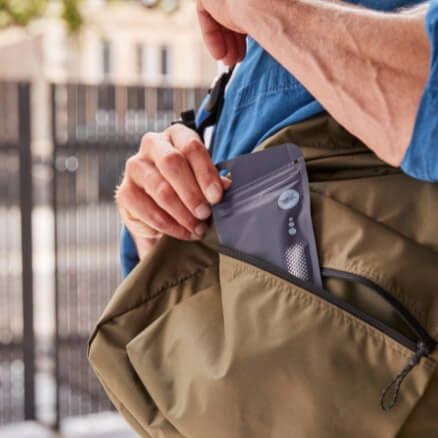
Other newer catheter options have convenient packaging that doubles as a disposal bag. For example, the GentleCath Air™ for Men comes in a pocket-sized package that’s easy to open and close. After you’re done cathing, you can pop the catheter back into the package and close it. Then you can discreetly toss it for quick, tidy disposal.
Travel with Confidence: 180 Medical Has Your Back
Mishaps, accidents, and even leaks can happen every now and then. That’s part of life, and it can happen whether you’re at home or away from home. However, many of our customers over the years have told us that planning ahead and keeping a flexible mindset have helped them keep doing the things they love.
Whether you’re planning a vacation, heading out on a day trip, or trying to feel more prepared for everyday outings, 180 Medical is here to help. Our trained specialists can answer catheter product questions, help you explore discreet travel-ready catheter options, and work with you to make sure you have the supplies you need.
If you’re not already part of our community, we invite you to contact us and experience our caring service for yourself. We’re ready to help you find the catheter supplies that are just right for you.
Download Our Catheter Travel Guide
Want more help preparing for an upcoming trip? Download our catheter travel guide for a more detailed packing checklist and travel planning tips for people who use catheters.
Frequently Asked Questions About Traveling with Catheters
Can you travel with catheters?
Yes. Many people who use intermittent catheters travel for work, vacations, family visits, and everyday outings. Planning ahead, packing extra supplies, and knowing how to cath hygienically away from home can help make travel easier.
Can you bring catheters on a plane?
Yes. Catheters and related medical supplies can generally be packed in carry-on or checked luggage. Many people prefer to keep catheter supplies in their carry-on bag in case checked luggage is lost or delayed.
How many catheters should I pack for travel?
Start by calculating how many catheters you use each day based on your prescription. Multiply that by the number of days you’ll be away, then pack extras in case of delays, emergencies, or changes to your routine.
Can I bring catheter lubricant or sterile water through TSA?
TSA allows medically necessary liquids, gels, and aerosols in reasonable quantities for a trip. These items may need to be screened separately, so tell a TSA officer about medically necessary liquids or gels at the checkpoint.
Should I pack catheter supplies in my carry-on?
Yes. If you’re flying, it’s a good idea to keep catheter supplies in your carry-on bag so you still have what you need if your checked luggage is lost or delayed.
Can TSA Cares help travelers with catheters?
Yes. TSA Cares provides support for travelers with disabilities, medical conditions, and other special circumstances. TSA recommends contacting TSA Cares at least 72 hours before your departure.
How can I discreetly dispose of catheters while traveling?
Many catheter users carry disposal bags, zippered plastic bags, or opaque bags for discreet disposal. Some catheter products also include packaging that can be used for disposal after catheterization.
What catheter types are helpful for travel?
Compact catheters, pocket catheters, hydrophilic catheters, pre-lubricated catheters, and closed system catheters may be helpful for travel because they can be discreet, portable, or easier to use away from home. The right option depends on your prescription, needs, and insurance coverage.
Can 180 Medical ship catheter supplies to my travel destination?
If you’re planning an extended trip within the United States, contact 180 Medical ahead of time to discuss whether your order can be shipped to where you’ll be staying.
What should I include in a travel catheter kit?
A travel catheter kit may include catheters, lubricant if needed, gloves, antiseptic wipes, hand sanitizer, underpads or paper towels, disposal bags, and any other insertion supplies recommended by your healthcare provider.
Disclaimer: This article is for informational purposes only and is not intended as medical advice. Information provided on 180medical.com should not be used as a substitute for medical advice, diagnosis, or treatment from a qualified healthcare professional. Please consult your healthcare provider with any questions about your condition, treatment, or medical supply needs.
